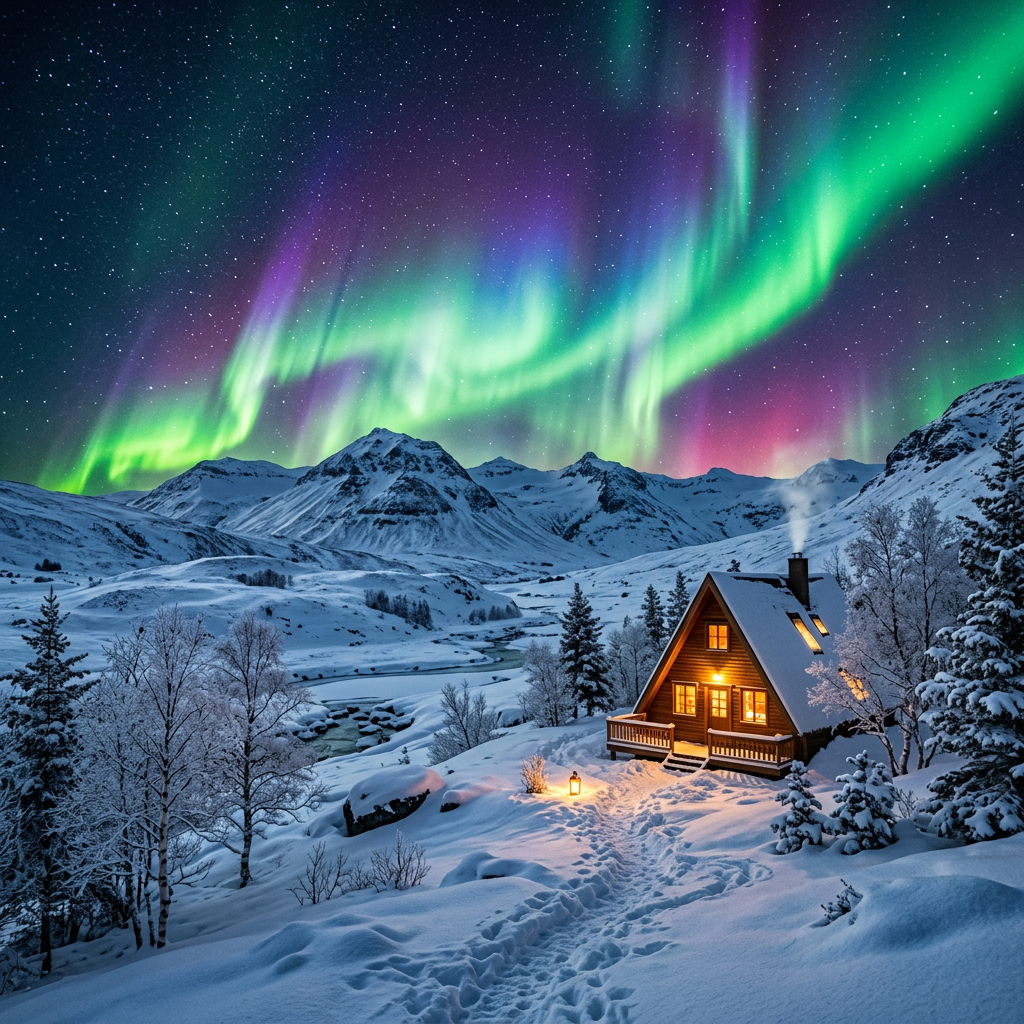
There are experiences that change you, and seeing the Northern Lights for the first time is one of them. A sky that was black and starlit suddenly erupts in ribbons of green, purple, and white, dancing and shifting as if the atmosphere itself is alive. Iceland, with its dramatic landscapes, minimal light pollution, and accessibility, is the best destination on earth for chasing the Aurora Borealis.
When to See the Northern Lights
The Aurora is visible in Iceland from mid-September through late March — the dark months when nights are long enough for the lights to be seen. Peak months are October, November, February, and March. You need three things to align: solar activity (KP index 3 or above), clear skies, and darkness. Download the Aurora Forecast app by the Icelandic Met Office — it tracks cloud cover and aurora activity in real time and is essential for planning.
Best Viewing Spots
Get away from Reykjavík's light pollution. Drive 30–60 minutes outside the city and the difference is dramatic. Classic spots include Þingvellir National Park (45 minutes from Reykjavík), the Snæfellsnes Peninsula, and anywhere along the South Coast with open sky. For the most dramatic experience, time your visit to the Jökulsárlón glacier lagoon — watching the northern lights reflect in the lagoon among floating icebergs is one of the most otherworldly sights imaginable.
Iceland Beyond the Aurora
Iceland is extraordinary even if the aurora doesn't cooperate. The Golden Circle — Þingvellir, Geysir hot spring, and Gullfoss waterfall — is a classic day trip covering some of the island's most dramatic scenery. The Blue Lagoon geothermal spa (book months in advance) is uniquely surreal. Seljalandsfoss (walk behind it), Skógafoss (climb the stairs alongside it), and the black sand beaches of Reynisfjara are genuinely unlike anywhere else on earth.
Reykjavík
Iceland's tiny capital punches above its weight culturally. The Hallgrímskirkja church tower gives panoramic city views. The Harpa Concert Hall — a glass honeycomb on the waterfront — hosts world-class performances. The food scene is excellent and internationally diverse, though expensive.
Practical Tips
Iceland is expensive — budget $150–$200 per day minimum. Rent a 4x4 if you plan to explore beyond Reykjavík, especially in winter when roads can be treacherous. Always check road conditions on road.is before driving. Layer up — temperatures drop sharply after dark. And be patient with the aurora. Sometimes you wait three nights and see nothing; other times you step outside and the whole sky erupts. The waiting is part of the magic.
Ready to Book Your Trip?
Search hundreds of airlines for the best fares — directly on our site.
Search Flights Now →Found this helpful? Share it!